


New to Aesthetic Medicine? What Should You Know Before Your First Treatment?
Updated October 2026
Maybe your feed is full of skincare routines and "tweakments." Maybe a friend just had her first Botox appointment and loved it. Or maybe you have noticed a few changes in your skin and want to get ahead of them. Whatever brought you here, you are not alone. More people in their 20s and 30s are exploring aesthetic medicine than ever before.
Starting early can be smart, but only if you start in the right place. The wrong first step can mean spending money on treatments you do not need, chasing trends that do not suit your face, or ending up with results that look overdone. The right first step builds healthy, glowing skin and a plan you can grow with over time.
Here is what aesthetic medicine actually includes, where most first-timers should begin, and how to protect your face, your budget, and your confidence along the way.
What Is Aesthetic Medicine?
Aesthetic medicine is a branch of medical care focused on improving skin health and appearance through non-surgical treatments. It includes injectables like neurotoxins and fillers, laser and energy-based treatments, and medical-grade skin treatments like peels and facials. The goal is natural-looking improvement guided by a medical assessment.
At Source of Health, aesthetic medicine sits alongside wellness care because we believe health and appearance are connected. Hydration, sleep, hormones, nutrition, and stress all show up in your skin. Treating the surface without considering what is happening underneath often leads to short-lived results.
Is It Too Early to Start Aesthetic Treatments in Your 20s?
It is not too early to start caring for your skin in your 20s, but most people at this age do not need aggressive treatments. The best early investments usually focus on skin quality, sun protection, and addressing specific concerns like acne scarring or texture. Injectables should be based on actual need, not social media pressure.
Here is a helpful way to think about it. Your 20s are a great time to build habits and address skin quality. Your 30s are when many people start to notice early expression lines or subtle changes in volume. Neither decade requires a dramatic overhaul. A good provider will tell you when you do not need something yet.
Where Should First-Timers Start?
Most first-timers should start with a professional assessment and treatments that improve overall skin health. Medical-grade facials, exfoliating treatments, and a solid at-home routine with daily sunscreen create a strong foundation. From there, you can add targeted treatments as specific concerns appear.
Start With an Assessment
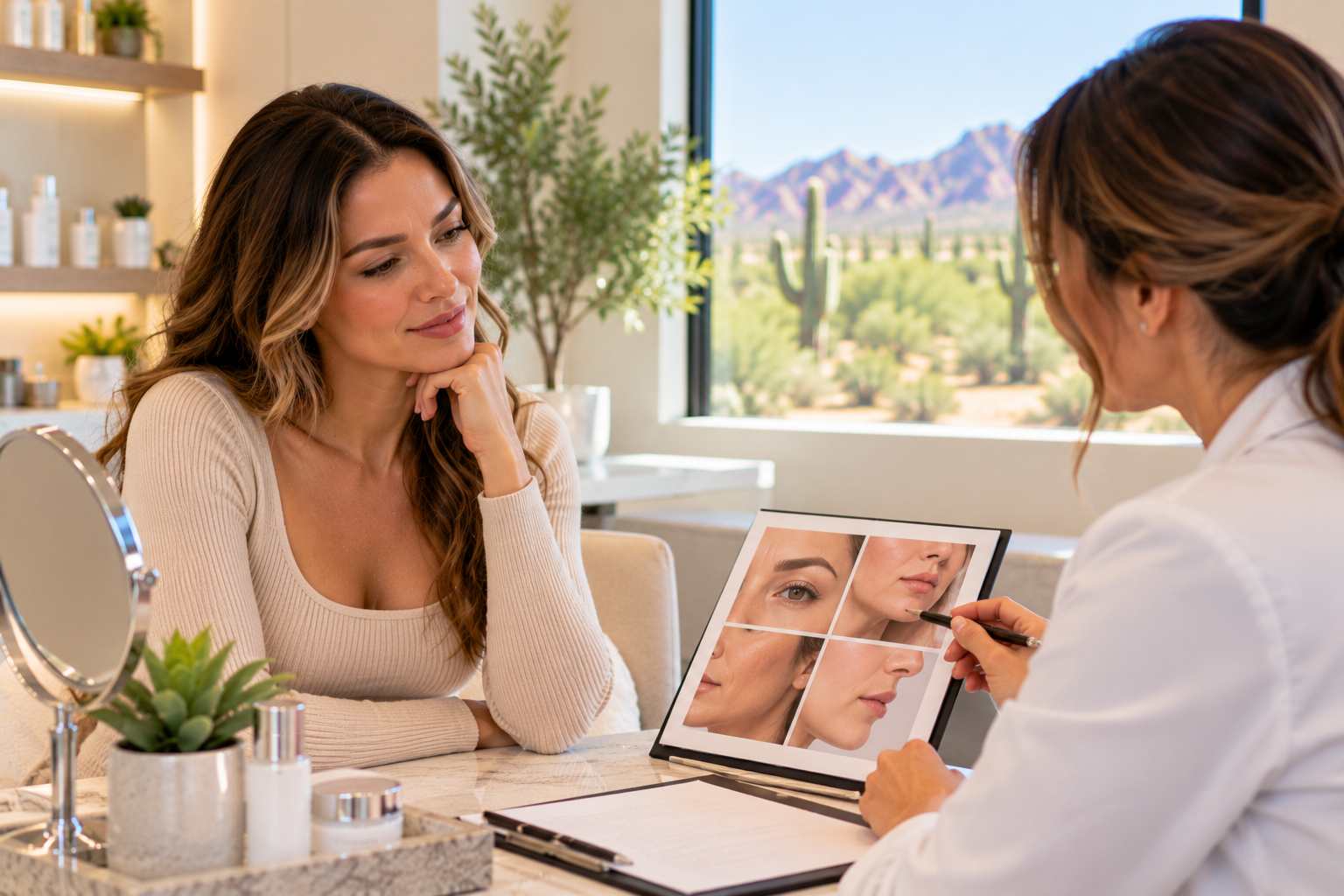
Before choosing treatments, it helps to understand your face. Our facial aesthetic analysis uses 3D imaging to assess proportions, symmetry, skin condition, and volume distribution. It is an assessment rather than a treatment, and it gives you and your provider a shared starting point so decisions are based on your features rather than trends.
Build Skin Quality First
Healthy skin makes every other treatment look better. Great first-step options include:
- Facials personalized to your skin type, with cleansing, exfoliation, extractions, and hydration
- Hydrafacial for congested pores, dullness, and dehydration, which is especially common in Scottsdale's dry air
- Dermaplaning to remove dead skin and peach fuzz for a smoother canvas
- Chemical peels for uneven tone, congestion, and early sun damage
These treatments are approachable, have little to no downtime for lighter options, and help you learn how your skin responds before trying anything more intensive.
Address Specific Concerns as They Show Up
If you have acne scars from your teen years, microneedling may help improve texture over a series of sessions. If unwanted hair or ingrown hairs are a daily frustration, laser hair removal offers long-term hair reduction. Active or cystic acne, on the other hand, should be evaluated by a dermatologist first, since aesthetic treatments are not designed to replace acne care.
Should You Get Botox or Filler for the First Time?
Botox or filler can be a good choice when there is a specific concern to address, such as frown lines that stay visible at rest or a feature you would like to balance. They are not required to have great skin. The best first injectable experiences are conservative, well planned, and guided by an experienced provider.
Neurotoxins for Expression Lines
Neurotoxins, including Botox and Dysport, relax the muscles that create expression lines like frown lines and crow's feet. Results start to show within a few days and typically last about 3 to 4 months. Many people in their late 20s and 30s start with small amounts in areas where lines are beginning to linger, which may help soften lines and limit how deeply expression creases set in over time.
Fillers and the Overfilled Look
Dermal fillers restore volume and definition in areas like the lips, cheeks, and jawline. The FDA approves dermal fillers for adults 22 and older and only for specific areas, and it notes that the most serious risk is accidental injection into a blood vessel. That is why choosing a qualified provider matters so much.
The "overfilled" look you may see online usually comes from too much product, too often, without a plan. At Source of Health, we favor a conservative approach. If you have had filler elsewhere that migrated or no longer looks right, our dissolving filler treatment uses hyaluronidase to break down hyaluronic acid filler so you can reset.
How Do Busy Professionals Fit Aesthetic Treatments Into a Packed Schedule?
Busy professionals usually do best with treatments that have little downtime and a predictable maintenance rhythm. Neurotoxins, Hydrafacials, dermaplaning, and light peels can often be scheduled around work without blocking off recovery days. Planning treatments in advance of big events also helps.
If you present to clients, appear on camera, or travel frequently, timing matters. Neurotoxins take about two weeks to reach full effect, so schedule them well before a big presentation or event. Deeper treatments like laser resurfacing involve more recovery, so plan those for slower weeks. A simple seasonal plan, built with your provider, keeps you looking fresh without last-minute scrambling.
Is Aesthetic Medicine Just for Women?
No. More men are exploring aesthetic treatments, especially for frown lines, skin texture, acne scarring, and unwanted hair. Many men prefer subtle, low-maintenance results that keep them looking rested rather than "treated." The same principles apply: start with an assessment and choose treatments that match real concerns.
How Do You Choose the Right Aesthetic Clinic?
Choose a clinic that starts with an evaluation, explains risks and realistic results, and is willing to tell you when you do not need a treatment. Look for medical oversight, clear communication, and a portfolio of natural-looking results. Avoid any provider who pressures you or promises dramatic changes.
A few questions worth asking at any consultation:
- Who oversees treatment and what training do they have?
- What does a conservative starting plan look like for me?
- What are the risks, downtime, and realistic results?
- How will we handle it if I am not happy with the outcome?
At Source of Health, our team is led by Dr. Steven Sorr, a naturopathic physician, educator in aesthetic medicine, and the founder and medical director of the clinic. You can learn more about our providers on the Meet the Team page and view real results in our before and after gallery.
Why Does Sun Protection Matter So Much in Scottsdale?
Sun exposure is one of the biggest drivers of early skin aging, and Scottsdale's year-round sunshine makes daily protection essential. Sunscreen also protects the results of treatments like peels, lasers, and microneedling. It is one of the most effective habits you can build in your 20s.
The American Academy of Dermatology recommends a broad-spectrum sunscreen with SPF 30 or higher. Reapply during long days outdoors, whether you are hiking Camelback Mountain, spending the afternoon in Old Town, or lounging by the pool.
Questions First-Timers Ask About Aesthetic Medicine
What is the best first aesthetic treatment?
For most people, a professional skin assessment and a skin-quality treatment like a medical-grade facial or Hydrafacial is a great first step. It builds a foundation before adding targeted treatments.
Is preventative Botox worth it in your 20s?
It depends on your muscle movement and lines. Some people in their late 20s benefit from small amounts where lines linger at rest, while others do not need it yet. A consultation helps you decide.
How old do you have to be to get filler?
The FDA approves dermal fillers for adults 22 and older. Candidacy also depends on your anatomy, goals, and health history.
How do I avoid an overdone look?
Start conservatively, work with a provider who plans treatments around your natural features, and avoid adding product too frequently.
Do aesthetic treatments hurt?
Most treatments involve mild, temporary discomfort. Numbing options are available for many procedures, and your provider will explain what to expect.
Glow Now, Plan Smart, Thank Yourself Later
Aesthetic medicine works best when it feels like self-care rather than pressure. Start with healthy skin, protect it from the sun, and add targeted treatments only when they make sense for you. That approach keeps your results natural and your plan sustainable for years.
Ready to take your first step? Book a consultation at Source of Health in Scottsdale or call (480) 361-4005. Explore our injectables and aesthetician services to see what fits your goals. Be radiant. Be well. Be you.