


Why Is My Hair Thinning, and When Is It Time to Look Into Hair Restoration in Scottsdale?
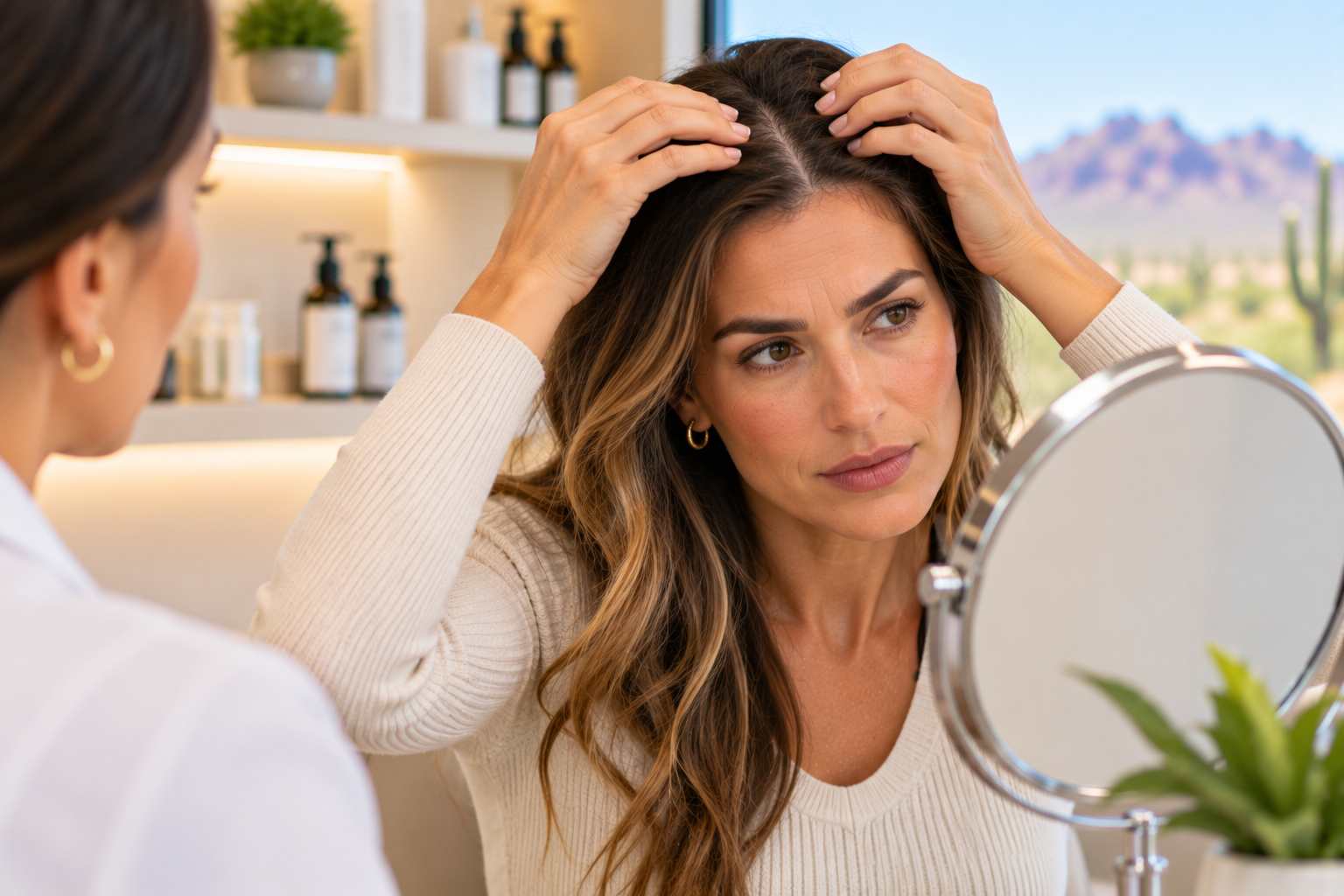
It usually starts small. A wider part in the bathroom mirror. More strands in the shower drain than you remember. A ponytail that feels a little thinner in your hand. For a lot of people in Scottsdale, the first reaction is to buy a new shampoo and hope for the best. The second reaction, a few months later, is to start searching for answers.
Thinning hair is common, and it is not only a "getting older" concern. Women in their 30s and 40s, busy professionals running on stress and short sleep, and even people in their 20s notice changes in density. The good news is that hair changes often have identifiable contributors, and there are more options than ever for supporting the scalp. At Source of Health, we look at hair the same way we look at skin: as a reflection of what is happening inside the body.
This guide walks through why hair thins, which signs deserve a doctor's visit, and how regenerative hair restoration fits into a whole-person plan.
What Causes Hair to Start Thinning?
Hair thinning usually comes from a mix of genetics, hormones, stress, nutrition, and overall health. MedlinePlus lists aging, family history, thyroid problems and other medical conditions, certain medications, stress, and poor nutrition among the most common causes of hair loss. In many people, more than one factor is at play at the same time.
Genetics and Pattern Hair Loss
Pattern hair loss is the most common type for both men and women. In men it often shows up as a receding hairline or thinning crown. In women it tends to look different: a widening part and overall thinning on top, while the hairline usually stays put. The American Academy of Dermatology notes that treatment for female pattern hair loss tends to work best when it starts early, which is one reason not to wait years before getting answers.
Hormonal Shifts
Hormones influence the hair growth cycle. Postpartum changes, perimenopause, menopause, thyroid imbalances, and shifts in testosterone can all affect how much hair you grow and how much you shed. This is why a thorough evaluation matters. If hormones are part of the picture, addressing only the scalp may leave an important piece unaddressed.
Nutrition and Lifestyle
Hair is one of the first things the body deprioritizes when nutrition runs low. Very restrictive diets, rapid weight loss, low protein intake, and nutrient gaps can all show up in your hair months later. Scottsdale's active, wellness-focused community is not immune here; intense training schedules paired with under-eating can quietly affect hair density.
Is It Shedding or True Hair Loss?
Shedding and hair loss are not the same thing, even though they can look alike in the drain. Excessive shedding is often a temporary reaction to a stressor, while hair loss means the follicles are producing less or finer hair over time. Telling them apart helps you choose the right next step.
According to the American Academy of Dermatology, excessive shedding (called telogen effluvium) can follow events like significant weight loss, giving birth, high stress, a high fever, surgery, or recovering from illness. Shedding usually settles once the body readjusts, and fullness often returns within six to nine months. If the stressor keeps going, the shedding can keep going too.
True hair loss tends to be gradual. You may notice the part widening, the scalp showing through under bright light, or hair that grows back finer and shorter than before. Some people experience both at once, which is another reason a professional evaluation is worth the time.
Why Do Busy Professionals and Younger Adults Notice Thinning Earlier?
Chronic stress, short sleep, and skipped meals can all affect the hair growth cycle, and busy professionals often live with all three. Younger adults are also more likely to notice changes early because they are photographed constantly and tend to track small changes closely. Earlier awareness can actually be an advantage, because hair responds best when follicles are still active.
The Stress and Sleep Connection
If you are a professional in North Scottsdale juggling long hours, travel, and a packed calendar, your hair may be keeping score. Prolonged stress can push more hairs into the resting phase at once, which shows up as shedding a few months later. Sleep, nutrition, and stress management are not glamorous parts of a hair plan, but they matter.
Gen Z and Early Thinning
People in their 20s are increasingly searching for answers about thinning hair, often after a stressful stretch, a restrictive diet, or a big life change. Some early thinning is genetic, and some is temporary shedding. The right approach starts with figuring out which one you are dealing with before investing in any treatment.
When Should You See a Doctor About Hair Loss?
You should see a doctor if your hair loss is sudden, patchy, painful, itchy, or accompanied by redness, scaling, or scarring. These signs can point to medical or scalp conditions that need diagnosis first. It is also wise to get checked if hair loss comes with fatigue, weight changes, or irregular periods.
Sudden or patchy hair loss, signs of scarring, or symptoms that suggest thyroid problems, iron deficiency, or hormonal changes deserve evaluation by a physician or a board-certified dermatologist. A dermatologist can confirm what type of hair loss you have and rule out conditions that need different care. Medications can also contribute, so never stop or change a prescription on your own; talk with the prescribing provider first.
What Is Regenerative Hair Restoration?
Regenerative hair restoration uses growth factors from your own blood to support the scalp and hair follicles. At Source of Health, this typically involves platelet-rich fibrin (PRF) or growth factors prepared from a small blood draw and injected into thinning areas of the scalp. The goal is to support follicle activity and improve hair density over time.
The process is non-surgical. A small sample of your blood is drawn and processed to concentrate the components used in treatment, and numbing is used to help keep you comfortable. Because the material comes from your own body, the risk of an allergic reaction is low, though temporary tenderness, mild swelling, or minor bruising at injection sites can happen.
How PRF and PRP Compare
PRP (platelet-rich plasma) and PRF (platelet-rich fibrin) are both made from your own blood. PRF is prepared differently and contains a fibrin structure that may release growth factors more gradually. Your provider can explain which approach fits your scalp and goals. You can learn more about how we use these therapies on our PRP/PRF page.
What the Research Says
Research on PRP for pattern hair loss is promising, and many studies show improvements in hair density and thickness. That said, protocols vary, results differ from person to person, and the science is still developing. It is best to think of regenerative therapy as one tool in a broader plan rather than a stand-alone fix.
How Many Sessions Will I Need, and When Will I See Results?
Most people need a series of treatments, typically 3 to 6 sessions spaced about 4 to 6 weeks apart. Noticeable changes usually take around 3 to 6 months because hair grows slowly. Maintenance sessions every few months help support results over time.
Patience is part of the process. Hair grows in cycles, and the follicles need time to respond. Many people first notice less shedding, then improved thickness, then better coverage in thinning areas. Taking consistent photos in the same lighting can help you track progress that is easy to miss day to day.
Your plan may also include other approaches discussed at your consultation, such as microneedling or prescription treatments. Dermatologists most often recommend topical minoxidil as a first-line option for female pattern hair loss, and combination plans are common.
Who Is a Good Candidate for Hair Restoration?
Good candidates are men and women with early to moderate thinning, a widening part, or reduced density, whose follicles are still active. People who have been completely bald in an area for many years usually see less benefit. A consultation helps set realistic expectations before you begin.
Hair restoration tends to work best when:
- Thinning is gradual rather than sudden or patchy
- Any underlying medical causes have been evaluated
- You are willing to commit to a full series and maintenance
- Your expectations focus on improved density rather than a full head of new hair
If you have a blood disorder, take blood thinners, are pregnant or breastfeeding, or have an active scalp infection, let your provider know. These can affect whether regenerative treatment is right for you right now.
How Does Source of Health Approach Thinning Hair Differently?
We look at your hair as part of your whole health, not as an isolated cosmetic issue. That means considering hormones, nutrition, stress, and lifestyle alongside scalp treatment. Our goal is a plan that fits your body, your schedule, and your goals.
Source of Health is led by Dr. Steven Sorr, a naturopathic physician and the founder and medical director of the clinic. Our integrative approach means that if your evaluation points toward a hormone or nutrition component, we can talk through options like hormone replacement therapy or functional medicine alongside scalp care. You can explore more about hair concerns on our hair loss and thinning hair page and see how we treat the scalp.
For Scottsdale residents, sun exposure is part of the conversation too. A thinning part line is more exposed to UV, so a hat or scalp-safe sunscreen on long hikes at Pinnacle Peak or afternoons on the golf course is a smart habit.
Questions People Ask About Thinning Hair and Hair Restoration
Can hair restoration help women with a widening part?
Yes, regenerative hair restoration may help women with a widening part, especially when thinning is caught early. Results vary, and a full evaluation helps identify contributing factors like hormones or nutrition.
Is hair restoration painful?
Most people describe mild discomfort. Numbing is used to help keep you comfortable, and you can usually return to normal activities the same day.
How long does it take to see results from PRF for hair?
Most people notice changes in about 3 to 6 months. Hair grows slowly, so a full series and maintenance sessions are usually part of the plan.
Does stress really cause hair loss?
Stress can trigger temporary shedding called telogen effluvium. Shedding usually improves once the stressor passes, though ongoing stress can keep it going longer.
Do I need lab work before hair restoration?
Lab work can be helpful when hormones, thyroid function, or nutrition may be involved. Your provider will recommend testing based on your history and symptoms.
Good Hair Days Ahead in the Desert
Thinning hair can feel personal and frustrating, but you do not have to figure it out alone. The earlier you understand what is driving the change, the more options you tend to have. Whether you are a busy professional, a woman noticing a wider part, or a younger adult who wants answers early, a thoughtful plan starts with the right evaluation.
Ready to talk about your hair? Book a consultation at Source of Health in Scottsdale, or call (480) 361-4005. Explore our full range of specialty treatments and see what patients are saying on our reviews page. Be radiant. Be well. Be you.