

.png)
Your Skin Isn't Oily or Dry, It's Both, and That's a Desert Climate Thing
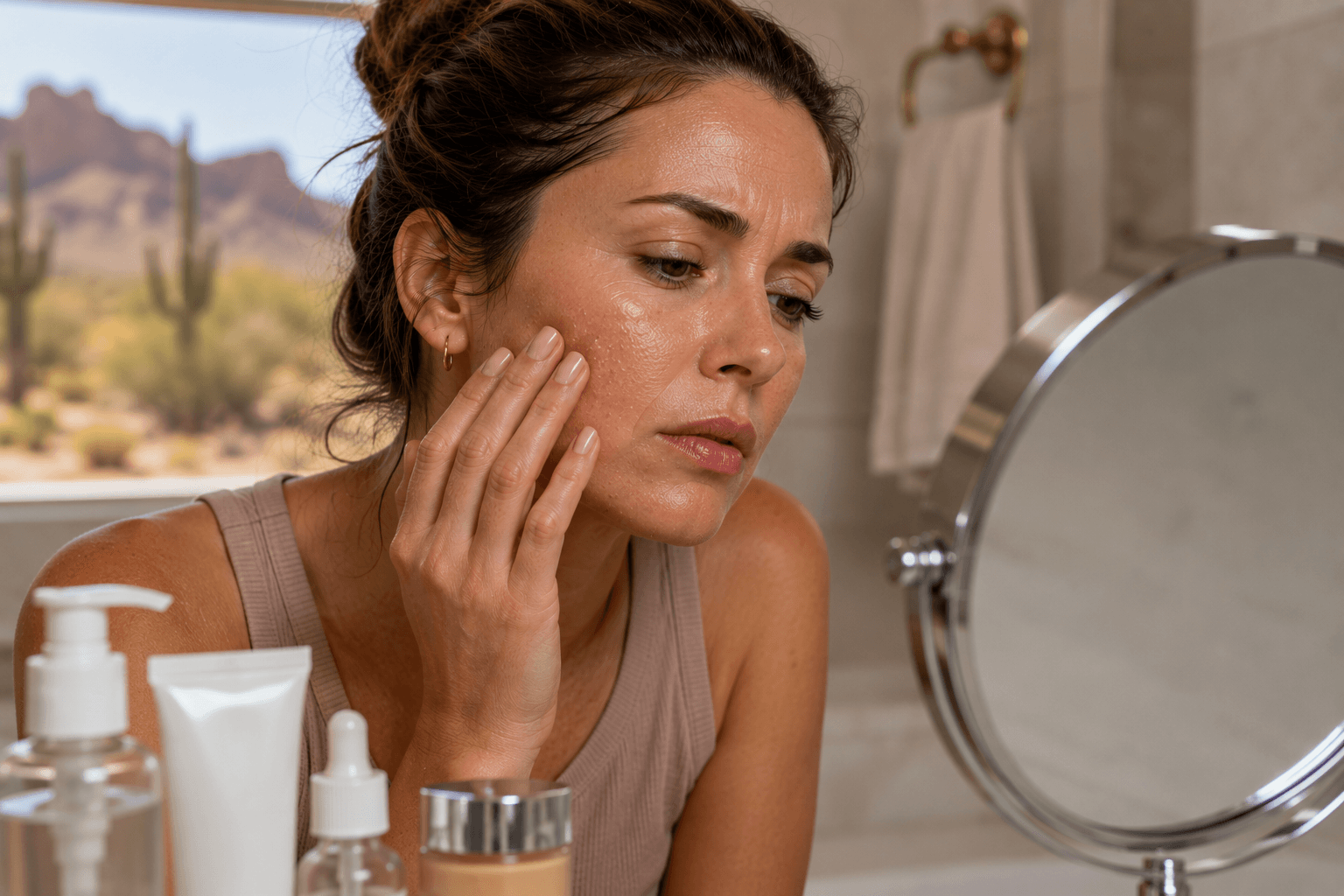
It is one of the more confusing skin complaints locals bring up. Skin feels tight and dry by the end of the day, yet pores still seem clogged and breakouts show up in the usual spots. This combination is common in low humidity climates, where the skin's outer barrier dries out and overcompensates by producing more oil, while dead skin cells and sweat mixed with sunscreen clog pores underneath.
A HydraFacial is built to address exactly this kind of layered concern in a single session. Updated this July 2026, here is what the treatment actually involves, why it tends to work so well for desert skin specifically, and what kind of results to expect.
What a HydraFacial Actually Does
A HydraFacial combines cleansing, exfoliation, extraction, and hydration into one multi step treatment using a specialized device rather than manual extraction tools. The process is designed to clear out clogged pores while simultaneously infusing the skin with hydrating serums, which is part of why it manages to address both dryness and congestion at the same time instead of picking one or the other.
The treatment typically moves through a few stages:
- A gentle cleanse and exfoliation to lift away dead skin cells
- A painless extraction step that uses suction to clear out debris from pores
- Infusion of hydrating and antioxidant rich serums tailored to your specific skin concerns
Why Dry Climates Make This Combination Concern More Common
When humidity is consistently low, the skin's barrier loses water faster than it can replace it. In response, oil glands often ramp up production to compensate, which can lead to clogged pores even on skin that otherwise feels parched. Add daily sunscreen and sweat from outdoor activity into the mix, and pores in a place like Scottsdale tend to accumulate buildup faster than in more humid regions.
Who Tends to See the Most Benefit
- Anyone whose skin feels tight and dry but still breaks out in certain areas
- People dealing with dullness or rough texture despite a solid skincare routine
- Anyone prepping for an event who wants a visible glow with zero downtime
- People who spend significant time outdoors and deal with sunscreen or sweat buildup in pores
- Those looking for a gentle option that works for sensitive skin
What a Session Feels Like
Most people describe a HydraFacial as relaxing rather than uncomfortable. There is no pain involved, since the extraction step uses suction rather than manual pressure, and the process typically takes around 30 to 45 minutes from start to finish. Because there is no downtime, most people go straight back to their day afterward, including applying makeup if needed.
What Results Actually Look Like
Skin typically looks visibly more hydrated and even toned immediately after treatment, with continued improvement in texture and clarity over the following days as pores stay clearer and hydration settles in. Results generally last three to four weeks, which is why many people schedule this as a recurring monthly treatment rather than a one time fix.
Building It Into a Regular Routine
Because a HydraFacial addresses both hydration and pore congestion, which are ongoing concerns in a dry climate rather than problems that get permanently solved, most people treat it as a maintenance routine. A monthly schedule tends to line up well with the skin's natural renewal cycle, keeping both dryness and clogged pores from building back up between sessions.
Pairing a HydraFacial With Other Treatments
A HydraFacial works well on its own, but it also pairs naturally with other treatments depending on your specific goals. A few common combinations include:
- HydraFacial after dermaplaning for an extra layer of hydration once buildup has been cleared
- HydraFacial alongside ongoing microneedling sessions to support skin recovery between treatments
- HydraFacial as a standalone monthly reset for anyone mainly focused on hydration and clarity
You can review the full range of skin treatments available on the aesthetician services page, or go directly to the HydraFacial service page for more specific details.
Is It Actually Gentle Enough for Sensitive Skin
Yes, in most cases. Because the extraction step relies on suction rather than manual pressure or harsh scrubbing, and the serums used can be adjusted based on sensitivity, a HydraFacial tends to be gentler than many other exfoliating or extraction based treatments. That said, anyone with active skin conditions or significant sensitivity should mention this during a consultation so the treatment can be adjusted accordingly.
A Simple Way to Think About It
If your skincare routine at home feels like it is fighting a losing battle against dry air, sunscreen buildup, and clogged pores all at once, a HydraFacial is essentially a professional reset button. It clears out what your daily routine cannot reach and replaces it with the hydration your skin has likely been missing.
Ready for a Reset That Actually Matches Your Climate?
Living in a place this sunny and this dry means your skin is working harder than most, and a routine that was not built with that in mind can only do so much. A HydraFacial gives your skin a genuine reset without any downtime standing between you and the rest of your day. You can learn more at Source of Health or head to the booking page to schedule your first session.
Frequently Asked Questions
How often should I get a HydraFacial? Most people schedule this treatment monthly, since results typically last three to four weeks before hydration and pore clarity begin to fade.
Is a HydraFacial painful? No. The extraction step uses gentle suction rather than manual pressure, and most people describe the experience as relaxing rather than uncomfortable.
Can I wear makeup right after a HydraFacial? Yes. There is no downtime, so most people apply makeup and return to their normal routine right after treatment.
Will a HydraFacial help if my skin is both oily and dry? Yes, this is actually one of the concerns it addresses best, since it clears clogged pores while simultaneously infusing hydration back into the skin.
Does a HydraFacial work for sensitive skin? In most cases yes, since the treatment can be adjusted in intensity and serum selection, though it is worth mentioning any sensitivity or active skin conditions during your consultation.