

.png)
What Is Medical Aesthetics in Scottsdale, Arizona?
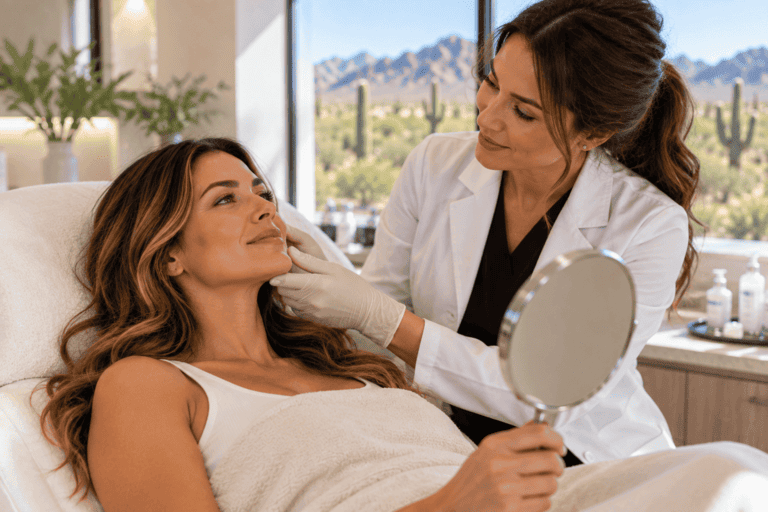
If you've searched for skincare help in Scottsdale, you've probably run into the term "medical aesthetics" without a clear explanation of what it actually means. Is it the same as a facial? Is it just a fancier way of saying Botox? The confusion is understandable, because the phrase gets applied to everything from injectables to laser resurfacing to skin treatments that sound almost identical to something you'd find at a day spa.
The real distinction isn't about which treatment you choose. It's about who's providing it, how it's evaluated, and what's actually happening beneath the surface. Understanding that difference can save you from wasted appointments and help you find care that actually addresses what's changing in your skin, not just what's trending.
What Does Medical Aesthetics Actually Mean?
Medical aesthetics refers to cosmetic treatments performed under medical supervision, using clinical-grade tools, injectables, and technology that go beyond what's available in a typical spa setting. It combines an understanding of skin physiology and anatomy with treatments designed to produce measurable, lasting change rather than a temporary glow.
The "medical" part matters because it changes what's possible. A spa facial might exfoliate and hydrate the skin's surface for a day or two. A medical-grade treatment, whether that's microneedling, a chemical peel, or a laser, can trigger collagen production, target pigment at a cellular level, or resurface skin in ways that produce results lasting months, not hours. That's a meaningful difference if you're trying to solve an actual concern rather than just feel pampered for an afternoon.
How Is Medical Aesthetics Different From a Regular Spa Treatment?
The main differences are training, technology, and depth of impact. Medical aesthetics is delivered by licensed providers using equipment and formulations that require clinical oversight, while spa treatments are generally designed to be safe for anyone to perform and experience without medical supervision.
That doesn't mean spa treatments have no place. A relaxing facial has real value. But if your goal is treating melasma, softening deep lines, tightening loose skin, or correcting sun damage that's built up over years of Arizona sun, you need tools that go deeper than a spa can offer. That's the category our Aesthetician Services, including chemical peels, dermaplaning, and HydraFacial, fall into, alongside our laser and device treatments.
What Concerns Does Medical Aesthetics Typically Address?
Medical aesthetics covers a wide range, including fine lines and volume loss, uneven skin tone, texture and pore concerns, sagging skin, and scarring, along with more specialized concerns like rosacea and melasma. Because providers are medically trained, they can also recognize when a concern needs a different kind of evaluation altogether.
This is part of why a good provider doesn't just ask "what treatment do you want," but instead asks about your skin history, your goals, and how your concerns have changed over time. Someone dealing with sun damage and pigmentation needs a different approach than someone dealing with sagging skin or early wrinkles and fine lines, even though all three might get labeled "anti-aging" in casual conversation.
Are Injectables Part of Medical Aesthetics?
Yes, injectables like neurotoxins and dermal fillers are considered core medical aesthetic treatments, since they require precise anatomical knowledge and are regulated as prescription treatments. They're often used alongside skin treatments rather than as a replacement for them.
It's a common misconception that injectables alone equal a full aesthetic plan. In reality, injectables address volume and movement, while skin treatments address texture, tone, and surface quality. A comprehensive plan usually draws from both categories, plus wellness support when hormonal or metabolic factors are involved. Our injectables category covers everything from dermal fillers to biostimulators, and it's typically discussed as one piece of a broader plan rather than a stand-alone fix.
Does Medical Aesthetics Connect to Overall Health?
It can, especially when skin changes are tied to hormonal shifts, stress, or metabolic factors rather than aging alone. A provider trained in both aesthetics and wellness is positioned to catch that connection instead of treating the skin in isolation.
This is where medical aesthetics starts to overlap with functional medicine. Thinning skin, persistent dullness, or changes in texture that don't respond to topical treatment sometimes point to something happening internally, whether that's a hormonal shift, a nutrient gap, or a metabolic change. Our wellness services, including hormone pellet therapy and IV therapy, exist specifically to address that side of the equation when it's relevant.
How Do You Find a Trustworthy Medical Aesthetics Provider?
Look for a provider who explains why they're recommending a specific treatment, not just what it costs, and who's transparent about their training and the technology they're using. A trustworthy provider will also tell you honestly if a treatment isn't the right fit for your concern.
It helps to start with a consultation rather than booking a treatment blind. At Source of Health, every new patient begins with a conversation about their skin, their goals, and their history before any treatment plan is built. You can review our full services list to see the range of options available, or read patient reviews to get a sense of the experience.
What Should You Expect From Your First Medical Aesthetics Appointment?
A first appointment should include a thorough discussion of your skin history, current concerns, and goals, along with an honest assessment of which treatments make sense and which don't, before anything is scheduled. It's reasonable to expect a provider to explain the reasoning behind their recommendations rather than simply presenting a price list.
Pricing structures also tend to reflect the complexity involved. Injectable treatments are typically priced by product volume, while skin treatments like peels or laser sessions are often priced per session or as part of a package designed for gradual improvement. A provider should walk you through realistic timelines for seeing results, since medical aesthetics, unlike a quick spa fix, is generally built around a series of treatments rather than a single visit producing everything at once. Understanding that upfront helps set expectations and makes it easier to plan a routine you can actually maintain, whether that means monthly skin treatments, seasonal touch-ups on injectables, or a combination tailored to how your skin responds over time.
The Bottom Line: Medical Aesthetics Isn't a Trend, It's a Standard
Medical aesthetics isn't about chasing the newest device or the most talked-about treatment. It's about getting care from someone trained to understand your skin and your goals, using tools that can actually deliver lasting change. Once you understand what separates it from a standard spa visit, it becomes a lot easier to know what you're paying for and what results to expect.
At Source of Health, medical aesthetics is the foundation of everything we do, from injectables and lasers to skin treatments and wellness support. If you're ready to talk through your goals with a provider who takes the time to understand them, you can book an appointment or explore our service categories to see where to start.
Frequently Asked Questions
Is medical aesthetics safe? When performed by a trained, licensed provider, medical aesthetic treatments have strong safety profiles. Risks generally come from inexperienced providers or unregulated settings, which is why credentials matter more than the treatment name itself.
How long do medical aesthetic results typically last? It varies by treatment. Neurotoxins usually last three to four months, dermal fillers can last six months to two years depending on the product and area, and skin treatments like chemical peels or laser resurfacing often produce results that build over a series of sessions and are maintained with periodic touch-ups.
Do I need a referral to see a medical aesthetics provider? No, most medical aesthetics clinics, including Source of Health, accept new patients directly through a consultation, without requiring a referral from another doctor.
Can medical aesthetics help with skin concerns caused by hormones? Yes, especially when paired with wellness or functional medicine support. Hormonal changes can affect skin texture, elasticity, and tone, and a provider who evaluates both can build a more effective plan than treating the skin alone.
What's the first step if I'm new to medical aesthetics? Start with a consultation rather than picking a treatment off a menu. A provider can evaluate your skin, ask about your goals and history, and recommend a plan suited to your actual concerns rather than a generic package.