

.png)
What's Causing Uneven Skin Tone in Scottsdale, Arizona?
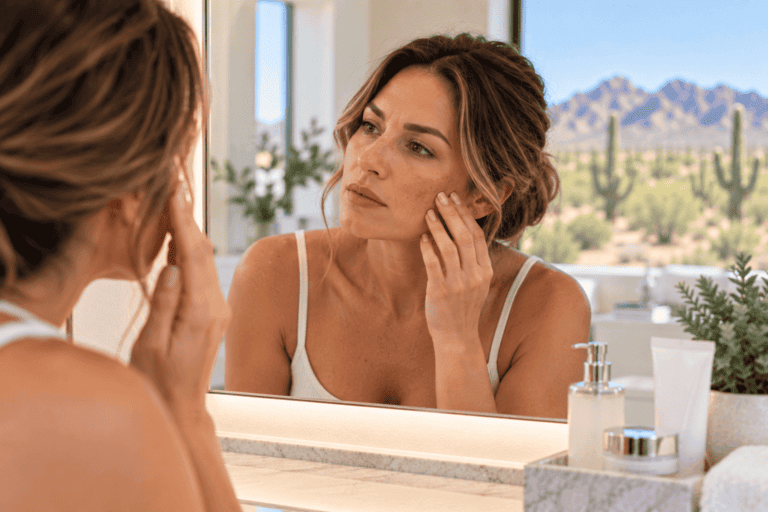
Living in Scottsdale means near-constant sun exposure, and even with diligent SPF use, most people notice their skin tone becoming less even over time. Dark spots show up on the cheeks and forehead. Some patches feel rougher than others. Skin that used to look fairly uniform starts to look blotchy in certain lighting, especially in photos. It's one of the most common concerns people bring in, and it rarely has a single cause.
Sun exposure, hormonal changes, past breakouts, and simple aging can all contribute to uneven tone, sometimes all at once. Topical products can help at the margins, but for most people, meaningful improvement requires something that works below the surface. That's where a chemical peel comes in, and understanding what's actually causing your specific unevenness makes a big difference in choosing the right one.
What's Actually Causing My Skin Tone to Look Uneven?
Uneven skin tone is usually caused by a combination of factors, including cumulative sun damage, hormonal pigmentation changes like melasma, leftover marks from past acne, and the skin's natural aging process, which slows cell turnover and allows pigment to build up unevenly. Identifying which of these is driving your specific concern matters for choosing the right treatment.
Sun-related pigmentation tends to show up as flat brown spots concentrated on areas with the most exposure, like the cheeks, nose, and forehead. Melasma often appears as larger, symmetrical patches, frequently across the cheeks or upper lip, and can be triggered or worsened by hormonal shifts. Post-inflammatory marks from acne usually sit exactly where a past breakout occurred. A provider can help you sort out which pattern applies to you before recommending a treatment plan.
How Does a Chemical Peel Actually Improve Skin Tone?
A chemical peel uses a controlled solution to remove damaged outer layers of skin, which encourages new, more evenly pigmented skin to surface while also stimulating collagen production underneath. Depending on the depth of the peel, results can range from a subtle brightening effect to significant improvement in stubborn pigmentation over a series of treatments.
This is different from what a serum or cream can achieve on its own, because a peel actively removes the damaged layer rather than just working to fade pigment from within it. For sun damage that's built up over years, that difference tends to matter a lot. Our chemical peel treatments are customized by depth and formulation based on what your skin actually needs.
Are All Chemical Peels the Same Strength?
No, chemical peels range from light peels that require no downtime to deeper, medical-grade formulations that produce more dramatic results over a longer recovery period. The right depth depends on your specific concern, your skin type, and how much downtime you're able to accommodate.
Lighter peels are often used for general brightening and maintenance, while deeper formulations are reserved for more stubborn pigmentation or texture concerns. This is why a consultation matters before booking, since choosing too aggressive a peel without preparation can cause irritation, while too light a peel may not make a meaningful difference in stubborn discoloration.
Can a Chemical Peel Treat Melasma Specifically?
Chemical peels can help improve melasma, but because melasma is hormonally influenced and prone to recurrence, it typically requires a more careful, gradual approach combined with strict sun protection rather than a single aggressive treatment. Overly aggressive peeling can sometimes worsen melasma rather than improve it.
This is a case where working with an experienced provider matters significantly. At Source of Health, our approach to melasma typically involves a carefully sequenced treatment plan rather than a one-time peel, since durable improvement usually depends on managing the condition over time rather than treating it as a single event.
Does a Chemical Peel Help With Texture, Not Just Tone?
Yes. By removing the outer layer of damaged skin and encouraging cell turnover, chemical peels can improve rough texture, enlarged pores, and even mild scarring in addition to evening out pigmentation. Many patients notice both effects together, since tone and texture concerns often stem from the same underlying skin damage.
For patients dealing with both concerns, we sometimes pair a chemical peel with dermaplaning beforehand to remove surface buildup, allowing the peel to work more evenly. It's also commonly paired with treatments like microneedling or PRX Derm Perfexion as part of a broader plan for skin quality.
What Should I Expect After a Chemical Peel?
Depending on the depth of the peel, you may notice redness for a day or two, followed by mild peeling or flaking over the following week as damaged skin sheds. Deeper peels involve more visible peeling and require more downtime, while lighter peels may cause little more than a slight glow with minimal disruption.
Strict sun protection afterward is essential, since freshly treated skin is more vulnerable to UV damage, and Scottsdale's sun makes this especially important. Your provider will walk you through a specific aftercare routine based on the peel you receive, including how soon you can resume your normal skincare products.
How Does Scottsdale's Climate Affect Chemical Peel Results?
Scottsdale's intense, near-year-round sun exposure means pigmentation tends to build up faster and return more quickly if sun protection lapses after treatment, which makes aftercare especially important here compared to more temperate climates. It also means preventive maintenance matters more, since even small gaps in sunscreen use can undo progress from a peel relatively quickly.
Many local patients find that a seasonal peel schedule, often lighter maintenance treatments through the sunnier months and slightly deeper treatments in the cooler months when downtime is easier to manage, works better than a single annual treatment. Your provider can help map out a schedule that accounts for your travel, your sun exposure at work or during outdoor activities, and how your skin has responded to treatment in the past, so the plan reflects how you actually live rather than a generic recommendation.
Getting Ahead of Uneven Tone Before It Gets Worse
Uneven skin tone rarely resolves on its own, and in a place like Scottsdale, ongoing sun exposure often means it gets more pronounced over time without intervention. Understanding what's actually driving your specific pattern, whether that's sun damage, melasma, or post-acne marks, is the first step toward choosing a treatment that will actually move the needle.
If dark spots, blotchiness, or rough texture have been bothering you, a consultation can help identify what's causing it and whether a chemical peel, alone or paired with another treatment, is the right next step. Our team at Source of Health can walk you through your options based on your skin's specific history. You can book an appointment to get started.
Frequently Asked Questions
How many chemical peel sessions does it typically take to see results? It depends on the depth of the peel and the severity of the concern. Light peels often show a noticeable difference after one to two sessions, while stubborn pigmentation like melasma or deep sun damage may require a series of treatments spaced several weeks apart.
Is a chemical peel safe for all skin tones? Chemical peels can be safe for a wide range of skin tones, but the formulation and depth need to be selected carefully, since deeper peels carry a higher risk of pigment changes in darker skin tones if not chosen appropriately. A consultation helps determine the right approach for your skin.
Can I wear makeup after a chemical peel? It depends on the depth of the peel and how your skin is healing. Lighter peels may allow makeup the next day, while deeper peels typically require a longer wait until peeling and redness resolve. Your provider will give you a specific timeline.
How long do chemical peel results last? Results can last several months to a year depending on the depth of the peel and how well you protect your skin afterward, particularly with consistent sun protection. Many patients maintain results with periodic touch-up peels.
Do I need to prepare my skin before getting a chemical peel? For deeper peels, yes. Some patients are asked to use specific skincare products in the weeks leading up to treatment to prepare the skin and reduce the risk of irritation. Your provider will let you know if any preparation is needed based on the peel you're getting.